Investing In Communities, Not Corporations
The 2023 Farm Bill must investing in community infrastructure.

A resilient, regional food economy is about a “management of home” that allows us, and our neighbors, to thrive even in the face of adversity.
This is especially relevant as we confront the impacts of climate change. It includes regenerative, collective stewardship of land, water, and other natural resources.
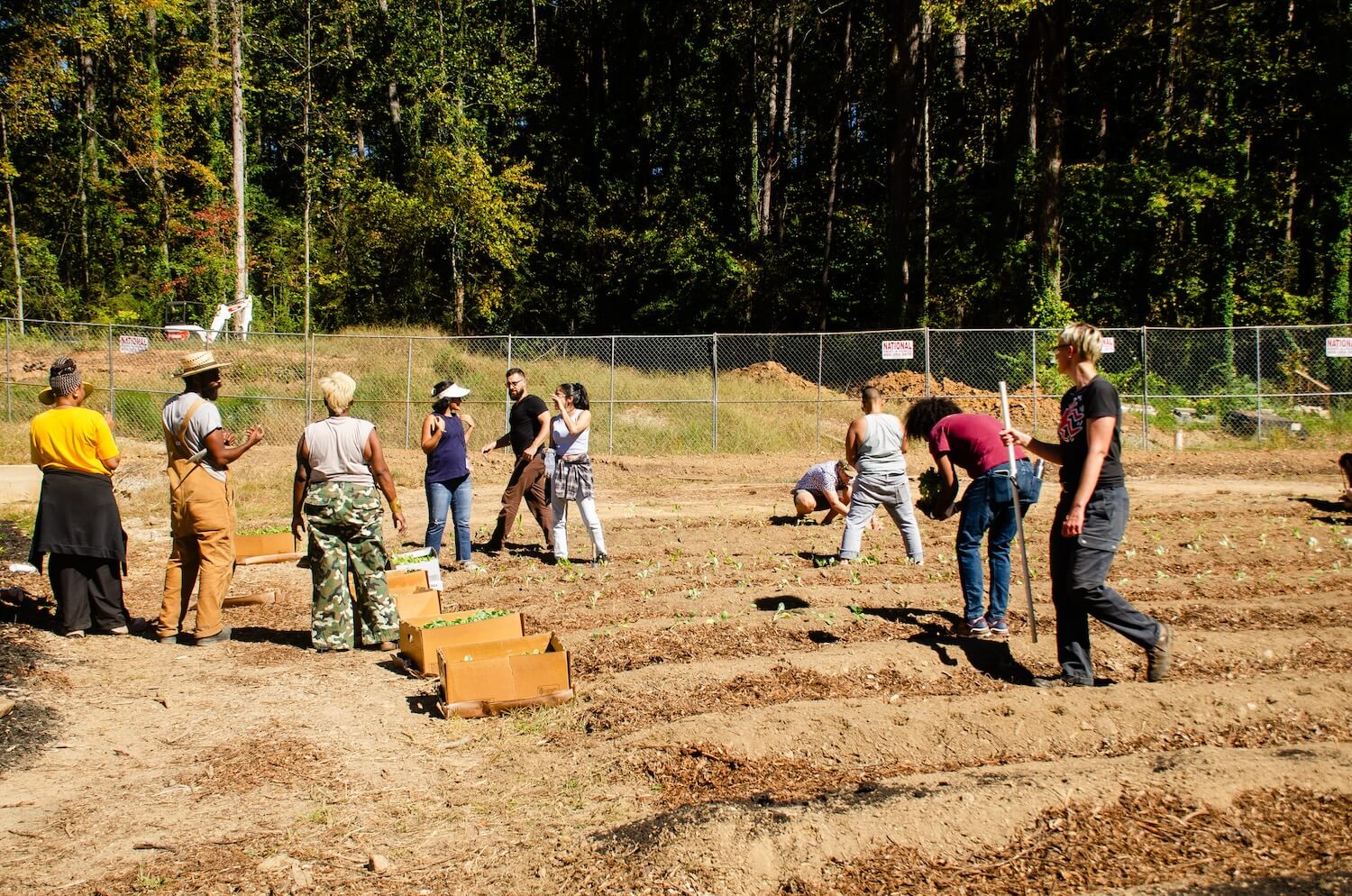
It’s an economy where there are vibrant opportunities for producers, distributors, and retailers to grow, catch, process, share, and sell local foods; where workers are owners, and where local, healthy food is the easy economic choice.
A resilient, regional food economy is about more than fair market-based relationships. It’s also about democratic governance: where local government and public organizations are accountable to an engaged populace.
In this vision, cooperative ownership structures that generate real opportunities and wealth growth for low-income communities and communities of color are encouraged and supported.
And it’s about meaningful work and relationships: where informal economies and traditional food ways can flourish; where human relationships and a sense of purpose are nurtured; and where there is understanding and reciprocity in our relationships with each other and the earth.
We spoke with the Oakland-Based Hope Collaborative about what it takes to nurture equitable food systems in a fast gentrifying city.

We spoke with CoFED about how the future of our food systems is community-led and cooperative.


July 1, 2022
The current food system is a web of national and global production and supp...

March 23, 2021
Today, cooperatives(coops) may be viewed as an alternate or unconventional ...

March 23, 2021
HEAL Member HOPE Collaborative was founded in 2011 when a group of folks fr...

Solidarity Not Charity: Mutual Aid for Mobilization and Survival (2020)
A Guide to Tribal Community Co-operative Development (2020)
A guide to transformative land strategies: Lessons from the Field (2020)
A people's orientation to a regenerative economy (2020)
US Policy Guide: Local and Regional Food Systems






Join the HEAL Community